Google Onebox
« Home
Saturday, December 6, 2008
Beneath the Twelve Mile Reef - Fun Movie
Beneath the Twelve Mile Reef To begin, this movie has a great beginning; it pulled me right into it.This is something not usually seen in movies of this type, so it makes it an unusual, yet pleasant experience.The action scenes are really great. Robert Wagner played his role great. Terry Moore actually caught my interest.WATCH Beneath the Twelve Mile Reef ONLINE BY CLICKING HERE!
If you love watching Robert Wagner or Terry Moore, you are deffinetly going to want to watch Beneath the Twelve Mile Reef.
CLICK HERE TO DOWNLOAD Beneath the Twelve Mile Reef ONLINE!
Beneath the 12-Mile Reef is a landmark, or rather watermark. The third ever CinemaScope production this was a prestige release, with Florida, Key West location Technicolor filming of never-before-achieved underwater cinematography, and four-channel stereo recording of a superlative Bernard Herrmann score. Even a still-impressive underwater battle with an octopus pre-dates the more famous giant squid of 20,000 Leagues Under the Sea (1954). The humans aren't bad either, with a young Robert Wagner making a charismatic if ethnically unconvincing Greek lead as sponge fisherman Tony, and Terry Moore playing Juliet to his Romeo with real vivacity. --Gary S. Dalkin
CLICK ON IMAGE BELOW TO GET Beneath the Twelve Mile Reef ONLINE:
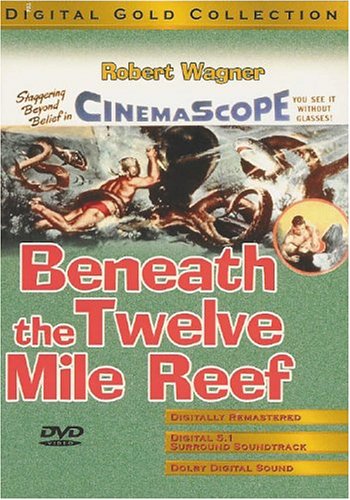
Watch A Preview Of Beneath the Twelve Mile Reef
You can get Beneath the Twelve Mile Reef at www.Amazon.com as well.
Schiessblog3371
Posted by marthaeqzm | 5:06 PM | 
A Full Review of the Wagner - Der Ring des Nibelungen
CLICK ON IMAGE BELOW TO GET Wagner - Der Ring des Nibelungen ONLINE:
Wagner - Der Ring des Nibelungen was an incredible movie! Both Bertrand de Billy and Harry Kupfer were amazing! The great cast includes Bertrand de Billy, Harry Kupfer, Falk Struckmann, Deborah Polaski, Graham Clark.
WATCH Wagner - Der Ring des Nibelungen ONLINE BY CLICKING HERE!
If you love watching Bertrand de Billy or Harry Kupfer, you are deffinetly going to want to watch Wagner - Der Ring des Nibelungen.
This 11-DVD set documents the 2004 staging of Wagner's Ring cycle at Barcelona's beautiful Gran Teatre del Liceu, a production first seen at the Deutsche Staatsoper Berlin. The producer, eminent Wagnerian Harry Kupfer, sees the cycle as a parable of man's destructive greed and Nature ravaged by man's technology. Kupfer's vision is realized in the stark, semi-abstract sets and direction. The World ash-tree from which the god Wotan wrenches the spear that symbolizes his mastery of the world dominates the stage picture in the early operas, withering in the later ones. Kupfer uses the theatre's advanced stage machinery to effortlessly move among the Valhalla of the gods, the earth, and the Nibelung's underworld realm. A grid screen backdrop changes to suit the action, with projections and Franz Peter David's lighting reflecting off the mirror-like stage surface. So the bridge the gods traverse to reach their new castle in Valhalla in Das Rheingold is indicated here by vertical lights on the backdrop, while the ring of fire that protects the sleeping Brunnhilde on her mountaintop in Die Walkre is accomplished by red bands of light whose glow is reflected onto the stage itself.
In Siegfried and Gtterdmmerung the sets become more industrial-looking, with forests of pipes, a propeller-like object at center stage, and other symbolic elements that make Kupfer's connection with his theme of rampant technology. Costume designer Reinhard Heinrich clothes the singers in nondescript, non-specific garb for the most part, although the Gibichung siblings of Gtterdmmerung seem dressed for a 1930s cocktail party. The bad guys tend to favor black raincoats and jackets, the giants in outfits reminiscent of those of hockey goalies. The ring itself is a large, brass-knuckle affair that can be seen from the top balcony. Most of the time sets, costumes, and lighting design make a positive impact, most impressively in the final scene of Gtterdmmerung, which packs visual and emotional punch. Sometimes, though, the filming itself fails to do justice to the staging, making the screen murky, at times ill-focused.
From a musical standpoint this is a worthy Ring cycle, ranking somewhat below those of Boulez, Barenboim, and Levine. Bertrand de Billy conducts competent performances, but without the authority, overall consistent vision, or intensity of the above-named trio. His orchestra is competent, but prone to occasional horn fluffs and scrawny string sound. The cast includes some outstanding Wagner singers. Deborah Polaski has some iffy moments but rises to the big scenes, such as the closing duet in Die Walkre and the final scene of Gtterdmmerung. The Wotan is Falk Struckmann, who's a petulant, one-dimensional god. By the time we come to the last two operas of the cycle (he also sings Gunther in Gtterdmmerung) his voice is worn and unsteady. The Siegfried, John Treleaven, encounters similar vocal problems though he brings considerable energy to the role. The most impressive of the singers are Graham Clark, the cynical Loge of Das Rheingold and the hyperactive Mime of Siegfried, and Matti Salminen, who's riveting as Hagen in Gtterdmmerung. The experienced Gnter von Kannen is a forceful presence as Alberich, and the Fricka, Lioba Braun, is outstanding too. Die Walkre's twin lovers, Siegmund and Sieglinde, Richard Berkeley-Steele and Linda Watson, sing and act well. Other worthy portrayals include those of bass Kwanchul Youn as the giant, Fasolt, and Elisabete Matos as Gutrune. The Valkyries, Rhinemaidens, and Norns are well-matched, neatly sung contributors too. Wagnerians will want this set for its provocative well-crafted view of Wagner's great cycle. --Dan Davis
CLICK HERE TO DOWNLOAD Wagner - Der Ring des Nibelungen ONLINE!
Watch A Preview Of Wagner - Der Ring des Nibelungen
You can get Wagner - Der Ring des Nibelungen at www.Amazon.com as well.
Hibmablog1725
Posted by marthaeqzm | 4:08 PM |
Gandhi - What a Movie Review is Not
CLICK ON IMAGE BELOW TO GET Gandhi ONLINE: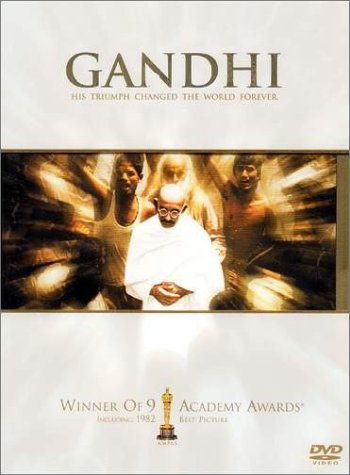
Gandhi A unique,,one of a kind movie! Both Ian Bannen and Candice Bergen has earned overwhelmingly positive reviews and is considered by many to be one of the best films of the year! Maybe that's what makes the movie so good.The great cast includes Ian Bannen, Candice Bergen, Michael Bryant, Avis Bunnage, Norman Chancer. The movie moves on like a dream and end leaving you wanting for more.
WATCH Gandhi ONLINE BY CLICKING HERE!
If you love watching Ian Bannen or Candice Bergen, you are deffinetly going to want to watch Gandhi.
Sir Richard Attenborough's 1982 multiple-Oscar winner (including Best Picture, Best Director, and Best Actor for Ben Kingsley) is an engrossing, reverential look at the life of Mohandas K. Gandhi, who introduced the doctrine of nonviolent resistance to the colonized people of India and who ultimately gained the nation its independence. Kingsley is magnificent as Gandhi as he changes over the course of the three-hour film from an insignificant lawyer to an international leader and symbol. Strong on history (the historic division between India and Pakistan, still a huge problem today, can be seen in its formative stages here) as well as character and ideas, this is a fine film. --Tom Keogh
Stills from Gandhi (click for larger image)
Beyond Gandhi on Amazon.com
Other Oscar Winners at Oscar Central | More Biographies on DVD | The Films of Ben Kingsley |
CLICK HERE TO DOWNLOAD Gandhi ONLINE!
Watch A Preview Of Gandhi
You can get Gandhi at www.Amazon.com as well.
Tagliariniblog3624
Posted by marthaeqzm | 1:07 AM |
May 19, 2008 May 20, 2008 May 21, 2008 May 22, 2008 May 23, 2008 May 24, 2008 May 25, 2008 May 27, 2008 May 28, 2008 May 29, 2008 May 30, 2008 May 31, 2008 Jun 7, 2008 Jun 8, 2008 Jun 9, 2008 Jun 10, 2008 Jun 11, 2008 Jun 14, 2008 Jun 18, 2008 Jun 19, 2008 Jun 20, 2008 Jun 21, 2008 Jun 22, 2008 Jun 23, 2008 Jun 24, 2008 Jun 25, 2008 Jun 26, 2008 Jun 27, 2008 Jun 28, 2008 Jun 29, 2008 Jun 30, 2008 Jul 1, 2008 Jul 2, 2008 Jul 15, 2008 Jul 16, 2008 Jul 17, 2008 Jul 18, 2008 Jul 19, 2008 Jul 20, 2008 Jul 21, 2008 Jul 22, 2008 Jul 24, 2008 Jul 25, 2008 Jul 26, 2008 Jul 27, 2008 Jul 28, 2008 Jul 29, 2008 Jul 30, 2008 Jul 31, 2008 Aug 1, 2008 Aug 2, 2008 Aug 3, 2008 Aug 4, 2008 Aug 5, 2008 Aug 6, 2008 Aug 7, 2008 Aug 8, 2008 Aug 9, 2008 Aug 10, 2008 Aug 11, 2008 Aug 12, 2008 Aug 13, 2008 Aug 14, 2008 Aug 15, 2008 Aug 16, 2008 Aug 17, 2008 Aug 18, 2008 Aug 19, 2008 Aug 20, 2008 Aug 21, 2008 Aug 22, 2008 Aug 23, 2008 Aug 24, 2008 Aug 25, 2008 Aug 26, 2008 Aug 27, 2008 Aug 28, 2008 Aug 29, 2008 Aug 30, 2008 Aug 31, 2008 Sep 1, 2008 Sep 2, 2008 Sep 3, 2008 Sep 4, 2008 Sep 5, 2008 Sep 6, 2008 Sep 7, 2008 Sep 8, 2008 Sep 9, 2008 Sep 10, 2008 Sep 11, 2008 Sep 12, 2008 Sep 13, 2008 Sep 14, 2008 Sep 15, 2008 Sep 16, 2008 Sep 17, 2008 Sep 18, 2008 Sep 19, 2008 Sep 20, 2008 Sep 21, 2008 Sep 22, 2008 Sep 23, 2008 Sep 24, 2008 Sep 25, 2008 Sep 26, 2008 Sep 27, 2008 Sep 28, 2008 Sep 29, 2008 Sep 30, 2008 Oct 1, 2008 Oct 2, 2008 Oct 3, 2008 Oct 4, 2008 Oct 5, 2008 Oct 6, 2008 Oct 7, 2008 Oct 8, 2008 Oct 9, 2008 Oct 10, 2008 Oct 11, 2008 Oct 12, 2008 Oct 13, 2008 Oct 14, 2008 Oct 15, 2008 Oct 16, 2008 Oct 17, 2008 Oct 18, 2008 Oct 19, 2008 Oct 20, 2008 Oct 21, 2008 Oct 22, 2008 Oct 23, 2008 Oct 24, 2008 Oct 25, 2008 Oct 26, 2008 Oct 27, 2008 Oct 28, 2008 Oct 29, 2008 Oct 30, 2008 Oct 31, 2008 Nov 1, 2008 Nov 2, 2008 Nov 3, 2008 Nov 4, 2008 Nov 5, 2008 Nov 6, 2008 Nov 7, 2008 Nov 8, 2008 Nov 9, 2008 Nov 10, 2008 Nov 11, 2008 Nov 12, 2008 Nov 13, 2008 Nov 14, 2008 Nov 15, 2008 Nov 16, 2008 Nov 17, 2008 Nov 18, 2008 Nov 19, 2008 Nov 20, 2008 Nov 21, 2008 Nov 22, 2008 Nov 23, 2008 Nov 24, 2008 Nov 25, 2008 Nov 26, 2008 Nov 27, 2008 Nov 28, 2008 Nov 29, 2008 Nov 30, 2008 Dec 1, 2008 Dec 2, 2008 Dec 3, 2008 Dec 4, 2008 Dec 5, 2008 Dec 6, 2008 Dec 7, 2008 Dec 8, 2008 Dec 9, 2008 Dec 10, 2008 Dec 11, 2008 Dec 12, 2008 Dec 13, 2008 Dec 14, 2008 Dec 15, 2008 Dec 16, 2008 Dec 17, 2008 Dec 18, 2008 Dec 19, 2008 Dec 20, 2008 Dec 21, 2008 Dec 22, 2008 Dec 23, 2008 Dec 24, 2008 Dec 25, 2008 Dec 26, 2008 Dec 27, 2008 Dec 28, 2008 Dec 29, 2008 Dec 30, 2008 Dec 31, 2008 Jan 1, 2009 Jan 2, 2009 Jan 3, 2009 Jan 4, 2009 Jan 5, 2009 Jan 6, 2009 Jan 7, 2009 Jan 8, 2009 Jan 9, 2009 Jan 10, 2009 Jan 11, 2009 Jan 12, 2009 Jan 13, 2009 Jan 14, 2009 Jan 15, 2009 Jan 16, 2009